What is an Account-Control Surface?
Understand the account-control surface and why account protection has to cover more than the login form.
Learning Centre
A residential proxy is a forward proxy whose traffic exits through a consumer or ISP connection. To the receiving website, the request can appear to come from an ordinary household rather than from a data centre, cloud provider, VPN or obvious proxy service.
Mobile proxies are closely related and often need the same application controls, but Peakhour labels them separately. Mobile carriers use different address-assignment and sharing models, including CGNAT, which changes the evidence and false-positive risk. A compromised small-office router can also act as proxy infrastructure without automatically being a residential proxy.
That does not make every residential proxy request malicious. Residential proxies are used for privacy, monitoring, localisation checks, ad verification, and research. They are also used in credential stuffing, scraping, ad fraud, fake account creation, inventory abuse, and other automated attacks. The wider Residential Proxies learning hub collects the defensive articles in this topic area.
Residential proxies are exits supplied through consumer or ISP connectivity. They can make automated traffic look closer to normal user traffic because the address belongs to an access network rather than a hosting provider. For defenders, the important question is not whether an address is residential. It is whether the request looks like a legitimate user, accepted automation or abuse routed through proxy infrastructure.
A proxy sits between the person or system making a request and the destination site. With a residential proxy, the exit address belongs to a consumer or ISP connection. The destination sees the proxy exit IP, not the original source.
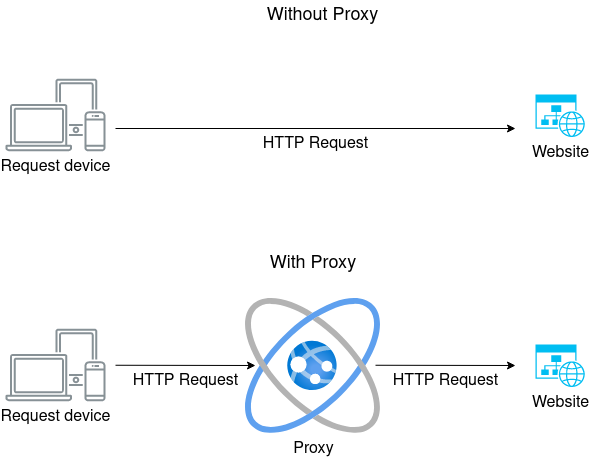
The important security detail is the origin path. A request may pass through a device, router, mobile connection, browser extension, VPN client, SDK, or other endpoint before it reaches the target website. If that endpoint is attached to a consumer network, IP-based security controls may see the request as residential traffic even when the request is automated or abusive.
Residential proxy networks are formed in several ways, and the consent model matters:
The defensive question is not "how do I build one?" It is whether the network was formed with informed consent, how abuse appears to the protected service, and how to reduce risk without blocking legitimate users who share the same residential infrastructure.
Residential proxy traffic is difficult because the IP address can look legitimate while the activity is not. Several properties create that ambiguity:
This is why datacenter proxies vs residential proxies is not only a sourcing distinction. It changes how defenders should evaluate traffic.
Common legitimate uses include localisation testing, availability monitoring from a residential viewpoint, ad verification, brand protection, and authorised research. Those uses still need governance: consent, scope, terms of service, privacy expectations, and the effect on the destination service all matter.
Common abuse patterns include account takeover attempts, credential stuffing, large-scale scraping, ad fraud, fake registrations, checkout abuse, and automation paired with anti-detect browsers. In those cases, residential proxies help attackers hide behind IP addresses that basic allow or deny lists may treat as normal. For automated abuse, bot management should evaluate proxy signals alongside route, account, credential, fingerprint, behaviour, and rate context. Teams protecting high-risk routes often pair proxy evidence with advanced rate limiting so a suspicious residential session can be slowed, challenged, or blocked without applying the same action to every user on that network.
Legality depends on jurisdiction, consent, sourcing, terms of service, and how the proxy is used. A residential proxy network formed with clear consent is different from one built from compromised devices or hidden bandwidth sharing. Even legally sourced proxies can be used for activity that violates site policies, privacy expectations, or fraud controls.
For defenders, the practical point is to avoid assuming that "residential" means "safe" or "malicious." Residential origin is a signal that needs context.
Static IP intelligence and reputation data are useful context, but they are not enough on their own. Proxy databases can lag fresh exits, and private residential networks may be active before public lists agree on what they are.
Modern residential proxy detection works closer to the request. Useful signals include IP and ASN context, network and TLS fingerprints, TCP behaviour, HTTP characteristics, device and browser consistency, route sensitivity, account state, credential risk, request timing, and historical behaviour. The result should feed a proportionate decision: allow, challenge, rate limit, block, or log for review.
Peakhour's residential proxy detection service is the product path for teams that need per-request proxy signals inside security decisions. This learning page remains the general explainer for what residential proxies are and why they matter.
Understand the account-control surface and why account protection has to cover more than the login form.
Learn about account takeover threats, protection strategies, and detection methods to secure your digital accounts and prevent unauthorised access.
An overview of Account Takeover Attacks
A practical reference for common AI crawler user agents, operators, purposes, and recommended Peakhour bot-management actions.
AI For Cybersecurity explains the concept in the context of AI security, with practical checks and mitigation considerations for site operators.
AI Image Generation explains the concept in the context of AI security, with practical checks and mitigation considerations for site operators.
© PEAKHOUR.IO PTY LTD 2026 ABN 76 619 930 826 All rights reserved.