Find the traffic slowing your site down
Peakhour helps teams discover unknown traffic impacting site speed and resilience, then classify, route, challenge, throttle, block, cache, or log each request before it drains origin capacity.
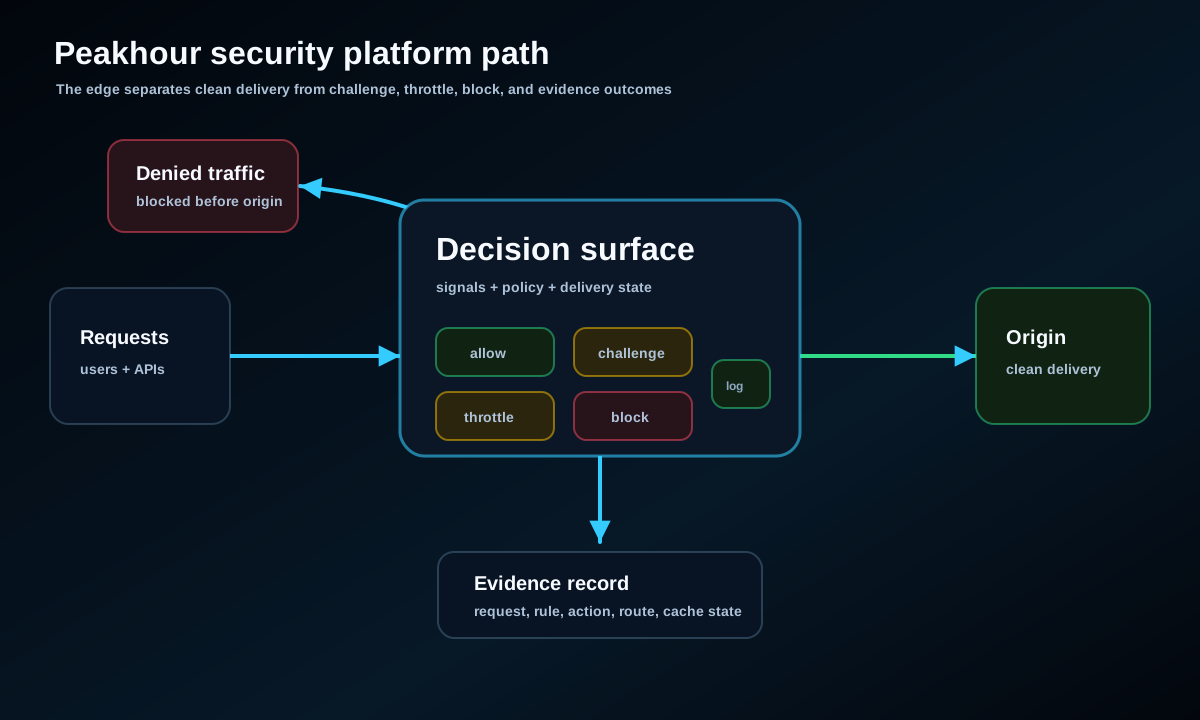
Site Speed and Resilience Break When Unknown Traffic Is Invisible
A slow or unstable site is not always a front-end problem. Human visits, partner APIs, SEO crawlers, scrapers, credential automation, inventory checks, bursty campaigns, and retry storms can all compete for the same origin capacity unless the edge separates them first.
Unknown Traffic Mix
Legitimate visitors, partner services, SEO crawlers, scrapers, credential tools, and monitors can all hit the same routes with very different cost, risk, and resilience profiles.
Speed and Origin Pressure
Unsorted requests inflate compute, database, search, and third-party service usage, which can turn into slower pages, fragile peaks, and worse user experience.
No Clear Cause
When decisions happen after the application is already under load, teams struggle to explain whether slowdown came from page delivery, bots, bursts, retries, or origin health.
Turn Traffic Visibility Into Control
Traffic Management moves the decision point to the edge. Peakhour classifies request context, applies policy, and chooses the lowest-friction action that protects speed, resilience, and clean user and API paths.
-
Classify Unknown Traffic
Use route, session, IP, ASN, geo, device, bot, rate, cache, and request history signals before traffic consumes application resources.
-
Protect the Fast Path
Send trusted traffic forward, steer region-sensitive requests, shift load away from unhealthy origins, and keep expensive or uncertain traffic on controlled paths.
-
Control Before Resilience Burns
Throttle bursts, challenge suspicious sessions, block confirmed abuse, cache safe responses, and reduce the volume that reaches databases, APIs, and dynamic application tiers.
Visibility Becomes a Control Loop
Decision records support the operating review. Teams can see the traffic class, matched policy, action taken, route outcome, and origin effect without reconstructing speed and resilience incidents from disconnected logs.
Operators can tune the policy loop from observed behavior instead of guessing which traffic caused cost, latency, instability, or origin pressure.
Controls That Protect Speed and Resilience
Bot and Browser Classification
Separate normal visitors, verified crawlers, suspicious automation, scrapers, and credential tools before they share the same origin path and capacity pool.
Route-Aware Rate Limits
Limit expensive endpoints by path, identity, IP, geography, method, and request pattern instead of applying one blunt threshold to the whole site.
Policy-Based Routing
Route clean requests to healthy origin paths while steering uncertain traffic through challenge, cache, throttle, or block outcomes.
Origin Shielding
Reduce unnecessary dynamic hits to databases, APIs, search backends, and application servers by enforcing decisions before the request reaches them.
Decision-Led Tuning
Use enriched logs and dashboard review to adjust thresholds, allowlists, challenges, cache rules, and routing policies with a record of each decision.
Related evidence
Traffic Control Proven in Production
Customer examples that connect Peakhour controls to production outcomes.

Gumtree
Improving Traffic Quality and Reclaiming Platform Control
Gumtree, Australia's leading marketplace, battled significant bot traffic that skewed analytics, enabled scammers, and increased infrastructure costs. Peakhour's bot management solution improved the origin traffic mix, cleaned up campaign analytics, protected A/B testing data, and created a new revenue stream.

Kitchen Warehouse
COVID-19 Traffic Surge Success
How Australia's #1 online kitchenware retailer thrived during COVID-19's unprecedented traffic surge and achieved 150% revenue growth with Peakhour's performance solutions.
Peakhour's traffic control solution has transformed our site. We now block over 20,000 unwanted requests daily, and our page load times have improved tenfold. As a result, we've seen a 30% jump in revenue. The visibility and control we now have over all our traffic has become essential to our success.
Explore the Controls Behind One Traffic Operating Model
Website Speed Comparison Tool
Start with free Core Web Vitals comparison before investigating the traffic patterns behind speed and resilience issues.
Bot Management
Classify browser, crawler, scraper, and automation behavior before it drains application capacity.
Advanced Rate Limiting
Throttle expensive or abusive request patterns by route, identity, geography, method, and decision signals.
Load Balancing
Route clean traffic to healthy origins while failover and geography policies keep services available.
WAAP and WAF Controls
Keep WAF, API, bot, rate, and DDoS decisions in the same decision-record request path.
Improve Web Vitals
Connect user-visible speed evidence to cache, image, delivery, and interaction improvements.
Find the Traffic Impacting Site Speed
Start with free site speed visibility, then use Peakhour to discover whether unknown traffic, bots, bursts, retries, or expensive requests are hurting resilience.
Learn More About Traffic Decisions and Control

Layer 7 DoS attacks and Full Page Caching
Discover how Full Page Caching can help mitigate layer 7 DoS attacks.
Read More
IP Threat Intelligence
Discover and block threats through data enrichment using managed IP reputation lists.
Read More
Network Fingerprint Signals and Security Decisions
How fingerprint evidence supports allow, log, challenge, rate limit, block, and review decisions at the edge.
Read More
Google Chrome's "IP Protection" and Online Privacy
An exploration of Google Chrome's new "IP Protection" feature, its promise of enhanced privacy.
Read More