
Account protection is often discussed as if it belongs to the login page. That made sense when most account abuse looked like someone submitting a username and password into a web form.
That is not how modern account journeys work.
A customer signs in through a browser, a mobile app, a partner integration, a password reset flow, a token refresh endpoint, a profile update request, a checkout API, and sometimes a service-to-service call that exists nowhere in the visible front end. The account is not protected by one screen. It is protected, or exposed, by the whole request path.
That is why API security and account protection should not be treated as separate operating problems. The API route, the identity context, the client evidence, the rate pattern, the token behaviour, the bot signal, and the account action all arrive together. Splitting those signals across disconnected tools makes the final decision weaker.
The Login Is Only the Start
Credential stuffing is the obvious example. Attackers test leaked credentials against login endpoints, but the useful outcome is rarely the login itself. The value comes after the session opens.
They try to change the email address. They add a shipping address. They reset a password. They check stored cards. They redeem loyalty value. They place an order. They call account APIs that were built for the real customer journey and then abuse them in a different sequence.
If the login defence is separate from the API defence, the organisation may see only fragments:
- A spike in failed logins in one dashboard.
- A suspicious token refresh pattern somewhere else.
- A burst of profile-change requests in application logs.
- A fraud case after checkout.
Each of those is useful. None is the full story.
The better model is to keep the decision close to the request. A request to /login is different from a request to /account/email, /checkout/payment, or /api/token/refresh. The route matters. So does the method, the session state, the previous failures, the network, the client evidence, and the account action being attempted.
APIs Carry Account Risk
APIs are not just developer plumbing. They are where many account journeys now happen.
Mobile apps use APIs for login, registration, password reset, saved addresses, payment methods, and checkout. Single-page applications call APIs behind browser journeys. Partner systems may call account or order APIs directly. Internal services may use API keys or service credentials that function like non-human accounts.
That creates a practical issue: account protection must cover both human and non-human identity paths.
OAuth, JWTs, API keys, refresh tokens, and service credentials all need lifecycle control, least-privilege access, rotation, validation, and monitoring. But those controls are still not enough if the protected API cannot see whether the request is behaving like abuse.
A valid token can be stolen. A valid API key can be overused. A real session can be driven by automation. A known customer can suddenly perform a high-risk action from a first-seen client through proxy infrastructure.
The request has to be judged in context.
Rate Limiting Has to Follow Business Logic
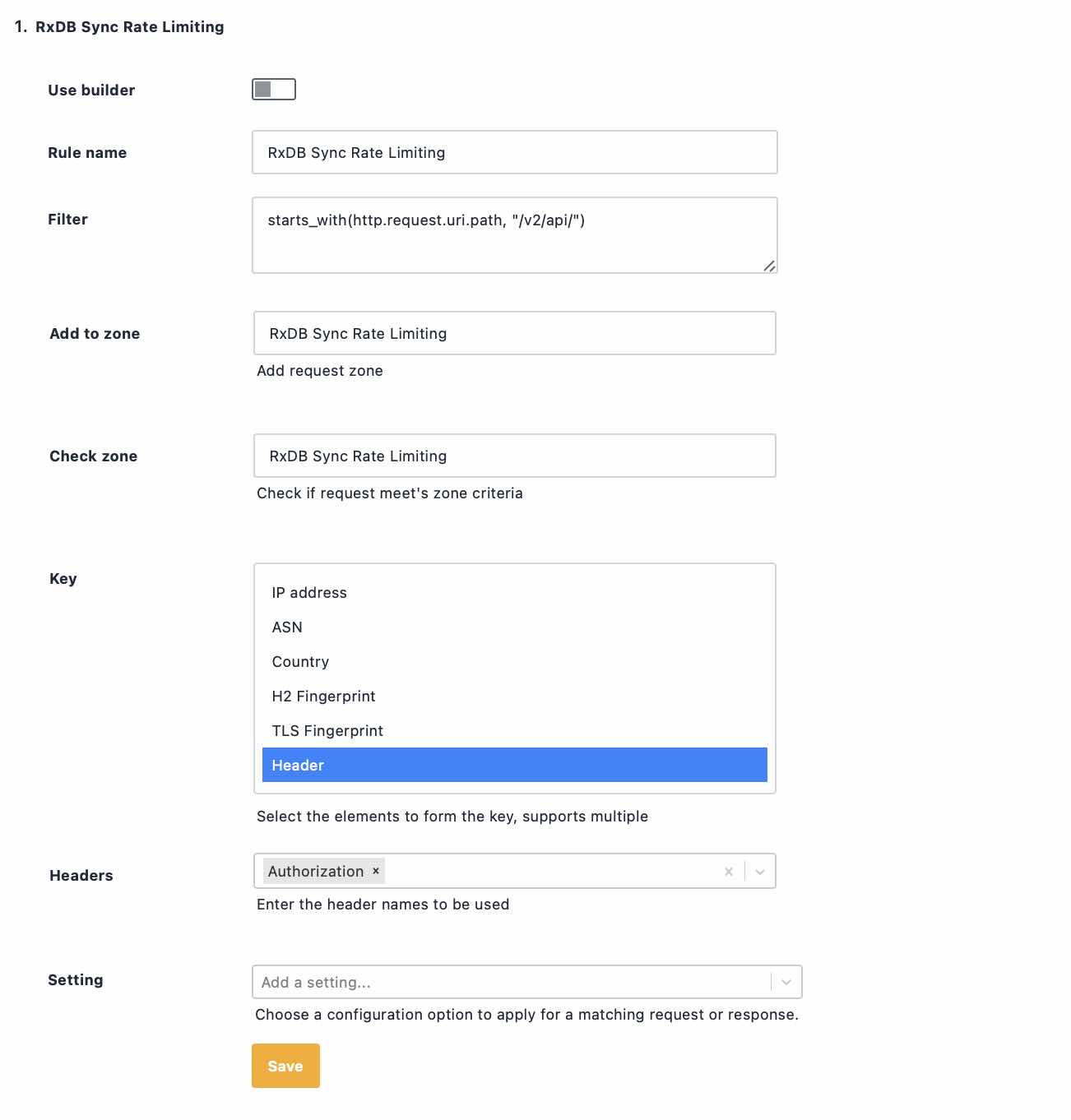
Basic rate limiting often starts with an IP address. That is an understandable first step, but it is not enough for account protection. Attackers rotate through proxy networks. Legitimate users may share a carrier or office IP. Some attacks are low and slow enough that no single IP looks exceptional.
For account journeys, rate limiting needs to be tied to the thing being protected.
Login attempts can be counted differently from password resets. Token refreshes can be counted differently from product searches. A failed authentication response can be treated differently from a normal read request. A route hit by a first-seen client can be treated differently from one used by a known browser session.
That is the point of API protection as an operating layer, not just an API inventory exercise. The route, schema, authentication state, bot signal, and rate key should be available to the same decision. Otherwise teams end up writing compensating rules in several systems and hoping the gaps line up.
The Edge Decision Needs Options
Not every suspicious request should be blocked. Some should be logged. Some should be rate limited. Some should be challenged. Some should be allowed because the business impact of a false positive is worse than the risk presented by that specific request.
Account protection is strongest when the action matches the journey.
A login request with weak risk signals might be allowed but watched. A password reset request with stronger signals might require step-up. A checkout attempt from a newly compromised session might be blocked or reviewed. A partner API key exceeding expected usage might be throttled without affecting normal customers.
Peakhour's position here is simple: API, bot, WAF, rate, and account controls work better when they share request evidence. That can run on Peakhour Edge, or it can sit beside the CDN and cloud edge already in place through bring your own edge. The important part is not the label on the component. It is whether the request path has enough context to make the right decision.
Account Protection Is a Journey Control
A useful account protection programme should be able to answer operational questions.
- Which routes are involved in account takeover attempts?
- Which sessions moved from suspicious login behaviour into account changes?
- Which tokens or API keys are behaving outside their expected pattern?
- Which controls created friction, and where?
- Which blocked requests actually protected account, checkout, or recovery actions?
Those questions cannot be answered from a login form alone. They require API visibility, account-event context, rate data, bot signals, and reviewable evidence.
That is the thesis of this series: API protection and account protection are one request-path problem. The account is compromised through a sequence of requests. The defence needs to see that sequence early enough to act.
For teams already working on account takeover prevention, the next step is not simply adding another login prompt. It is connecting the account journey to the API routes that now carry it.