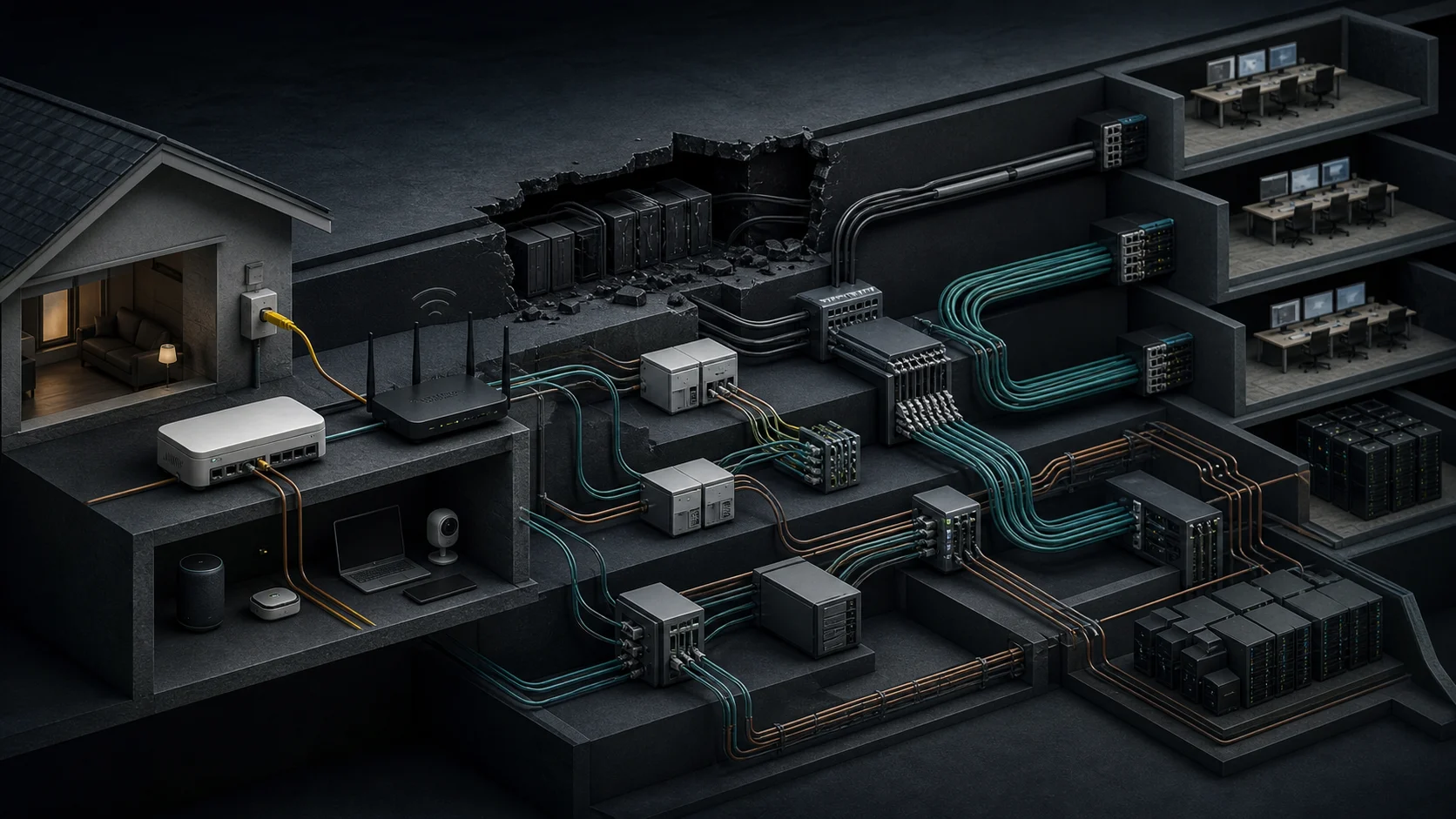

Account creation and password reset may sit under the same /account/ prefix. They are not the same security decision. One creates a new identity; the other can transfer control of an existing one.
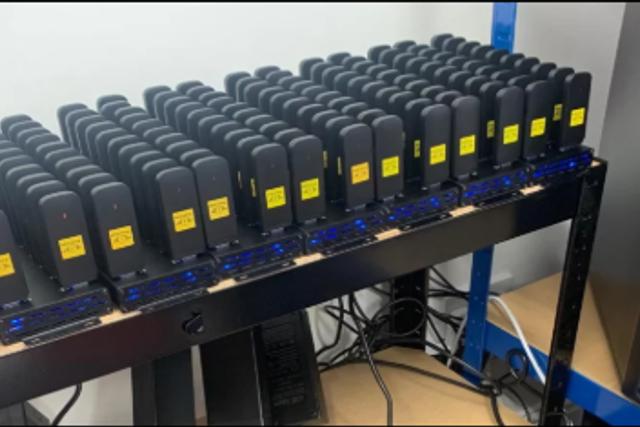
The same problem appears when a team applies one residential-proxy action across login, checkout, and public APIs. Low-risk traffic is rejected, shared networks create support cases, and the attacker moves to an unlabelled exit or another route.
Policy has to begin with what each request can do. These five routes have different identities, costs, recovery paths, and abuse patterns, so the proxy result changes each one differently.
1. Account Creation
Signup abuse creates fake accounts for promotion fraud, spam, inventory reservation, scraping, or later account farming. A residential proxy helps the operator distribute registrations and make geography look ordinary.
Useful evidence includes:
- registrations across a shared device or fingerprint cohort;
- repeated email, phone, payment, referral, or promotion patterns;
- verification completion and time to complete;
- route sequence before and after signup;
- residential proxy and network context;
- account creation velocity across IPs and client cohorts.
A first-seen proxy result may only justify logging. Proxy use combined with repeated device evidence and failed verification can justify a shared limit or stronger verification. Preserve legitimate households and mobile networks by avoiding one-account-per-IP assumptions.
2. Login
Login protection has to handle password mistakes, credential stuffing, password spraying, and targeted account takeover without turning the attack into an account lockout service.
The OWASP Credential Stuffing Prevention Cheat Sheet recommends layered controls including MFA, breached-password checks, connection and device fingerprinting, and defence in depth.
For a residential proxy login, look at:
- exposed credential state;
- failures against this account across all IPs;
- accounts attempted by this client cohort;
- familiar device and session history;
- normal or abnormal route sequence;
- success, failure, MFA, and challenge outcomes.
One failure from a new address is weak evidence. Distributed failures across many accounts with a shared cohort are stronger. Rate limit the behaviour, not merely the exit.
3. Password Reset
Password reset is both a recovery mechanism and a route to account control. It also leaks information if response behaviour reveals whether an account exists.
OWASP's Forgot Password Cheat Sheet recommends consistent messages and response timing, side-channel delivery, rate limiting, and protection against excessive reset requests.
Residential proxy use should raise attention when it appears with account enumeration, repeated reset initiation, token guessing, or a new client followed by recovery-factor changes.
The action may be a tighter account-and-cohort limit, delayed processing, step-up verification, or a user notification. A broad IP block can stop legitimate recovery for every person sharing the exit.
4. Checkout and Stored Value
Checkout risk is not limited to card testing. Automated clients can reserve scarce inventory, abuse promotions, drain loyalty balances, test stored payment instruments, or change shipping details after account takeover.
Connect the network signal to the transaction:
- established account and device history;
- payment, address, basket, and promotion changes;
- velocity across accounts and instruments;
- prior login or recovery risk in the same session;
- repeated declines and response patterns;
- inventory or application cost created by the request.
A proxy signal on a normal repeat purchase may add little. The same signal after a breached-credential login and recovery-email change should carry more weight. Step-up verification or a bounded transaction hold can be safer than a network-wide deny.
5. Public and Partner APIs
APIs often lack browser JavaScript and interactive challenge support. They may also expose expensive search, export, GraphQL, or object-access operations.
Use the identities the API already has: tenant, token, API key, client certificate, object, operation, and schema outcome. Add network and fingerprint cohorts where they help group rotation.
The OWASP API Security Top 10 calls out unrestricted resource consumption and unrestricted access to sensitive business flows. Residential proxy rotation can distribute both. Route-aware limits should account for operation cost rather than applying one requests-per-minute value to the whole API.
Machine clients cannot complete a browser challenge. A predictable 429, reduced operation budget, token step-up, or deny response may be the correct protocol action.
One Signal, Five Policies
Peakhour Residential Proxy Detection feeds proxy evidence into the request decision with IP, credentials, device, behaviour, and route context. Advanced Rate Limiting can count using route, ASN, country, IP, TLS fingerprint, response code, and other request attributes.
That allows each route to have its own contract:
| Route | Primary concern | Useful action |
|---|---|---|
| Account creation | Scaled fake accounts | Verify and limit across client cohorts |
| Login | Credential reuse and spraying | Count failures across account and cohort |
| Password reset | Enumeration and account recovery abuse | Consistent responses, account limits, step-up |
| Checkout | Fraud and stored-value loss | Transaction-aware verification or hold |
| API | Resource and business-flow abuse | Identity- and cost-aware limits |
Run new policies in monitor mode first. Record proxy prevalence, actions, successful completion, false positives, challenge outcomes, and origin cost. Move to enforcement by route, with an owner and rollback condition.
The implementation work is to give each route an explicit contract, then verify that its action protects the journey it was written for. A shared proxy result can feed all five contracts without forcing all five routes into the same response.