
Residential proxies have changed the shape of API and account abuse. The old picture was easier to reason about: too many failed logins from one IP, a known hosting provider range, an obvious bot user agent, or a burst that crossed a threshold quickly enough to trip a rule.
That still happens, but it is not the harder problem.
The harder problem is the attempt that arrives through ordinary consumer networks, spreads itself across many addresses, and behaves just slowly enough to avoid looking like an incident. One login attempt here. A password reset probe there. A token refresh pattern that is unusual only when it is seen beside the route, the client, the ASN, the credential history, and the account event.
That is why residential proxy detection should be treated as part of the account and API decision path, not as a standalone allow/block list.
The Account Workflow Is Now a Distributed Target
Attackers do not need to break the whole application at once. They can work through the account surface in pieces:
- Login attempts against known usernames.
- Password reset initiation and verification.
- New account registration.
- Token issue and refresh routes.
- Payment, address, profile, and email changes.
- Loyalty, wallet, checkout, or stored-value workflows.
- API calls that reveal whether an account or credential is valid.
Each route may look acceptable in isolation. The risk appears when the pattern is joined together.
A residential proxy network helps the attacker keep that pattern quiet. Requests rotate through many residential-looking exits. IP-based rate limits see different sources. A reputation feed may not have labelled a fresh or private proxy network yet. Geo checks can look plausible enough. The traffic does not necessarily arrive as a clean burst.
This is where static thinking breaks down. If the only question is "is this IP bad?", the answer will often arrive too late or be too blunt to use safely.
Fresh and Private Proxy Networks Create a Timing Problem
Many teams think about proxy detection as a database problem: look up the IP, see whether it is a proxy, then block it. That works for some traffic, especially known data centre proxies and commodity infrastructure.
Residential proxy abuse is less tidy. Fresh networks can appear before public datasets have a confident label. Private networks may not show up in broad feeds at all. Some exit points are shared with legitimate users. Some sit behind carrier-grade NAT or normal household connections. Blocking the address outright can create customer pain, while allowing it without context leaves the account flow exposed.
This is the practical reason Peakhour talks about residential proxy use as a signal. The signal matters, but it has to sit beside IP intelligence, connection characteristics, client history, request behaviour, account state, and route sensitivity.
A residential proxy on a marketing page may only need logging. The same proxy signal on a login route with recent failures may justify a challenge. On a password reset or high-value account change, it may justify step-up authentication, throttling, or blocking depending on the rest of the evidence.
The control should match the risk of the action.
Low-and-Slow Behaviour Is Still Automation
Low-and-slow abuse is uncomfortable because it avoids the easy operational story. There is no dramatic spike. There may be no single IP worth banning. The application may not be overloaded. Support may only see a few confused users, a few locked accounts, or a gradual rise in reset attempts.
For API and account workflows, this is still automation. It just looks less like a flood and more like a background process.
Useful signals include:
- Repeated failed authentication across a shared fingerprint or client pattern.
- Many accounts touched by similar request timing.
- Token or reset routes used out of sequence.
- Browser characteristics that do not match the claimed client.
- Residential proxy use on sensitive account routes.
- Fresh IP or ASN patterns appearing around account events.
- Similar request shapes distributed across unrelated accounts.
None of these signals has to prove abuse by itself. The point is to combine them early enough that the application does not have to make the decision alone.
Peakhour's view is that proxy detection belongs in the same operating model as bot management, rate limiting, account risk scoring, and event evidence. The useful question is not "can we block every residential proxy?" It is "what should this route do when proxy use appears with this account, this client, this credential pattern, and this recent behaviour?"
API Routes Need the Same Treatment as Browser Flows
A common gap is protecting the visible login page while leaving API routes with weaker controls. Browser-side checks can help on web flows, but many account actions now happen through mobile apps, single-page applications, partner integrations, and backend APIs.
Those routes still need context. They need request-level validation, route-aware thresholds, proxy and IP signals, token checks, and evidence that can be reviewed later. A login API, a reset API, and a profile-change API should not all receive the same action just because the source address has the same reputation.
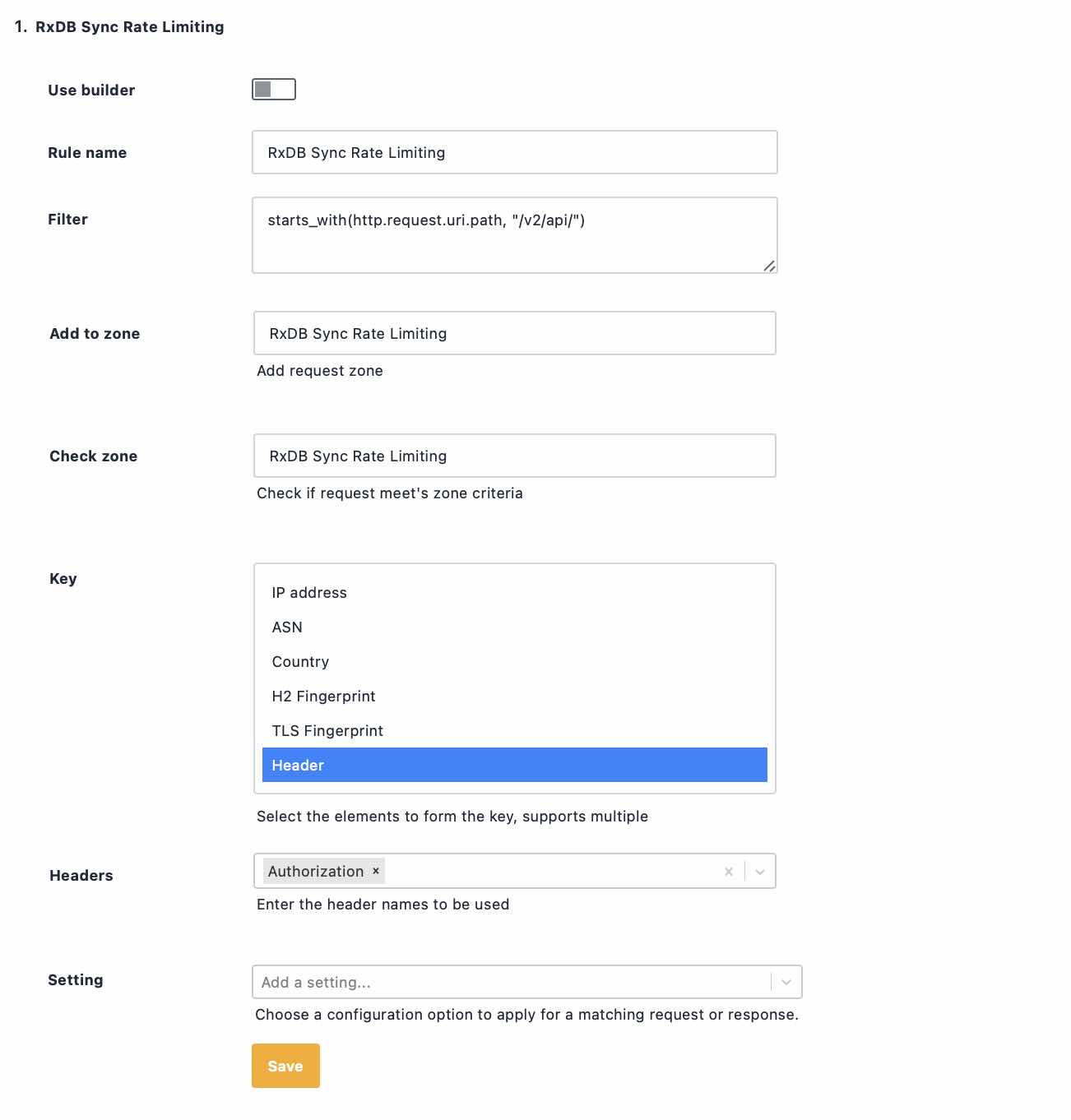
This is also why rate limiting has to move beyond source IP. A rule can key on a token, header, fingerprint, account identifier, route, response code, or a combination of signals. That makes it possible to slow failed login behaviour without punishing every legitimate user behind the same network.
The background reading on proxy detection challenges and quantifying residential proxy risk covers the broader detection problem. For API and account teams, the immediate step is more operational: find the routes where a residential proxy signal should change the action.
The Right Outcome Is Controlled Friction
Residential proxy detection is not a magic verdict. It is a way to make the account decision more honest.
Some traffic should pass. Some should be logged. Some should be rate limited. Some should be challenged. Some should be blocked. The difference should come from route sensitivity, request context, and observed behaviour, not from a single IP label.
A practical policy might look like this:
- Monitor proxy use across all account and API routes.
- Apply tighter thresholds on login, reset, token, and account-change routes.
- Combine proxy use with credential, client, rate, and behaviour signals.
- Preserve decision records so security and support can explain what happened.
- Move from monitor to enforce only after reviewing false positives and customer impact.
That model gives teams a way to respond to residential proxy abuse without turning every shared residential network into a casualty.
For a grounding definition, see What is Residential Proxy Detection?. For the product control, see Residential Proxy Detection.
The important shift is simple: residential proxies are not just a network category. In account and API protection, they are context for deciding how much trust a request deserves.