A Proxy Takedown Is Not a Security Control
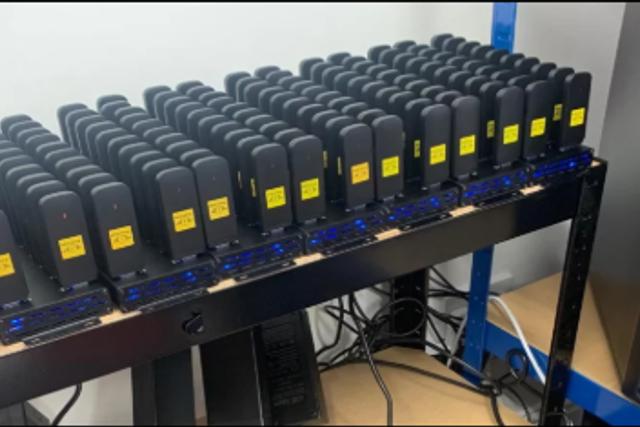
Proxy-network enforcement can reduce supply and protect device owners. Your application still needs current intelligence, behaviour correlation, route-specific controls, and measured request decisions.
Category
Security, performance, and edge delivery articles collected by topic.
Proxy-network enforcement can reduce supply and protect device owners. Your application still needs current intelligence, behaviour correlation, route-specific controls, and measured request decisions.
Application teams cannot clean compromised televisions, routers, or household devices. They can stop treating the residential address as proof and control what the relayed request is allowed to do.
A distributed pool can keep each residential IP quiet while expensive application routes fail. Mitigation has to follow request cost and behaviour, not only traffic volume.
An anonymised connection is not automatically abusive. Security policy should distinguish expected privacy and corporate access from proxy use that appears beside risky behaviour.
A useful proxy event records the request, signal provenance, policy, action, and outcome. A timestamp and a risk score are not enough to explain an enforcement decision.
Replacing a CDN is not the only way to improve bot and proxy controls. The harder requirement is preserving trusted client context, enforceable policy, and decision evidence across the request path.
Residential proxy detection is useful evidence. The security decision still has to account for the route, credentials, client history, behaviour, and cost of getting the action wrong.
JA4 did not descend from Cisco Mercury. The two projects come from different strands of TLS fingerprinting research and solve different operational problems.
JA3 made TLS fingerprints easy to log and share, but the technical ideas behind it had already been tested in SSL Labs experiments, a p0f patch and FingerprinTLS.
TLS fingerprints group similar protocol implementations. They do not prove which application, device or person made a request.
Cisco's open-source collectors, fingerprinting research and Encrypted Visibility Engine form a clear lineage, but they are not interchangeable parts of one public system.
A useful open fingerprint database needs provenance, competing labels, raw evidence, format versions and licences—not another unexplained hash list.
We reviewed the main public fingerprint resources. The formats are open, but current application labels and auditable ground truth remain scarce.
Sorting makes TLS fingerprints more stable, but it also removes ordering evidence. Here is how to test whether the discarded variation matters.
A practical way to use network fingerprints for bot and rate-limit decisions without mistaking a shared client cohort for identity.
A reproducible lab runs JA3, JA4 and Cisco Mercury against the same TLS ClientHello and compares what each fingerprint preserves.
Recent guidelines from the Australian government have specified practical measures businesses need to take to protect personal information. Learn more.
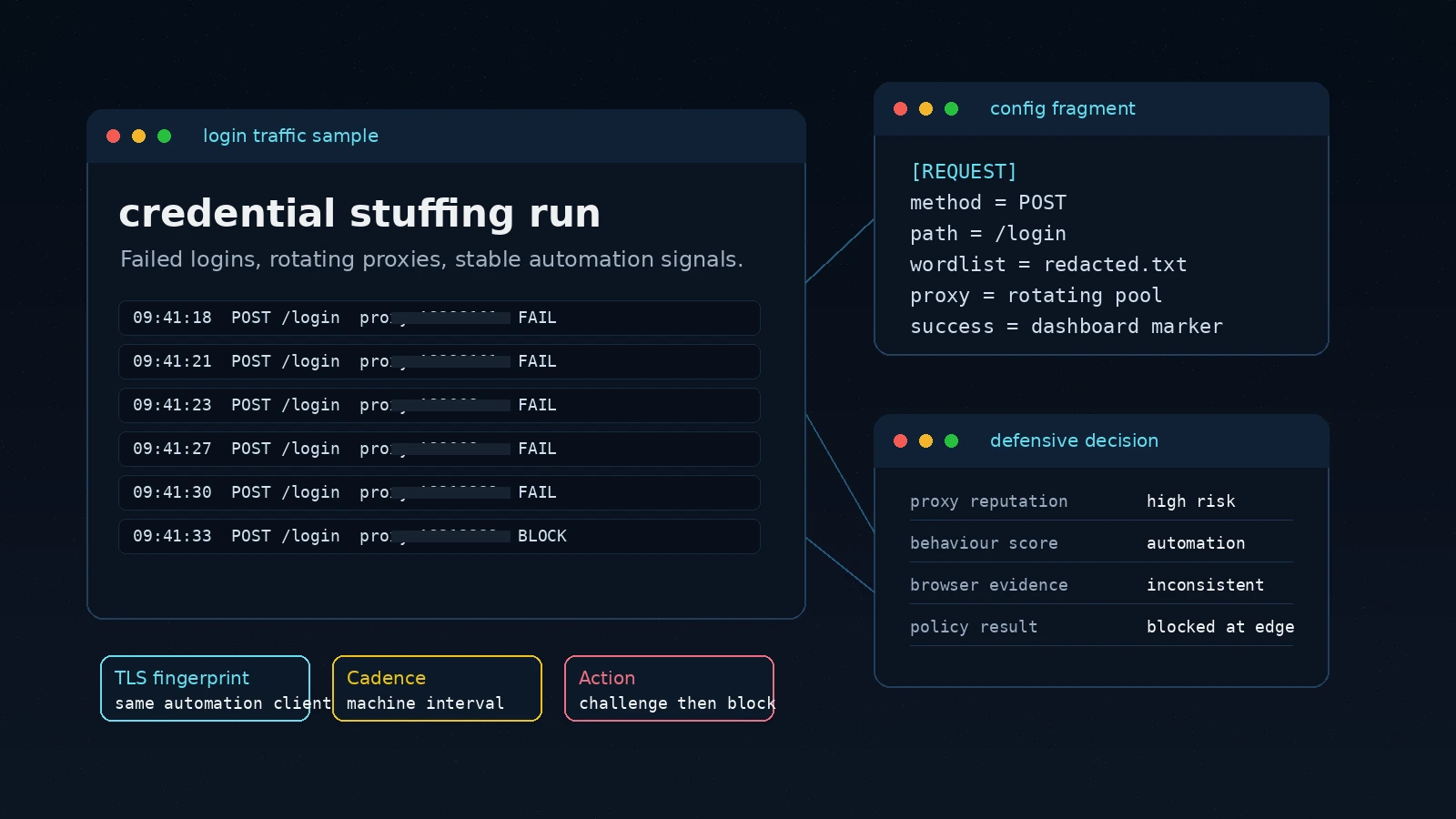
A deep dive into how credential stuffing attacks work, the tools used, and how to build a multi-layered defense.
Residential proxies change the network path while anti-detect browsers change the client presentation. Detection works by finding inconsistencies across the request, not by treating either signal as identity.
Bots are part of account takeover, fraud, scraping, and other abuse. Identity and access management leaders need a clear business case for bot management, or their organisations face avoidable account takeover losses and will be less prepared for the risks introduced when customers use AI agents.
CAPTCHAs have long been a mainstay of bot management solutions, but the tradeoffs are lower conversions, find out just how bad it is.
Analysis of attempts to exploit a recent Share Point zero day vulnerability reveal network fingerprinting and classification is a robust defense.
AI agents with reasoning capabilities like DeepSeek are revolutionizing exploit development, marking the end of traditional security approaches based on static rules and patterns.
An exploration of how AI agents are reshaping API design principles and why we must evolve our approach to serve both machine and human consumers.
How open reasoning models transform automation from rigid scripts to autonomous agents, fundamentally changing our approach to security and digital interactions.
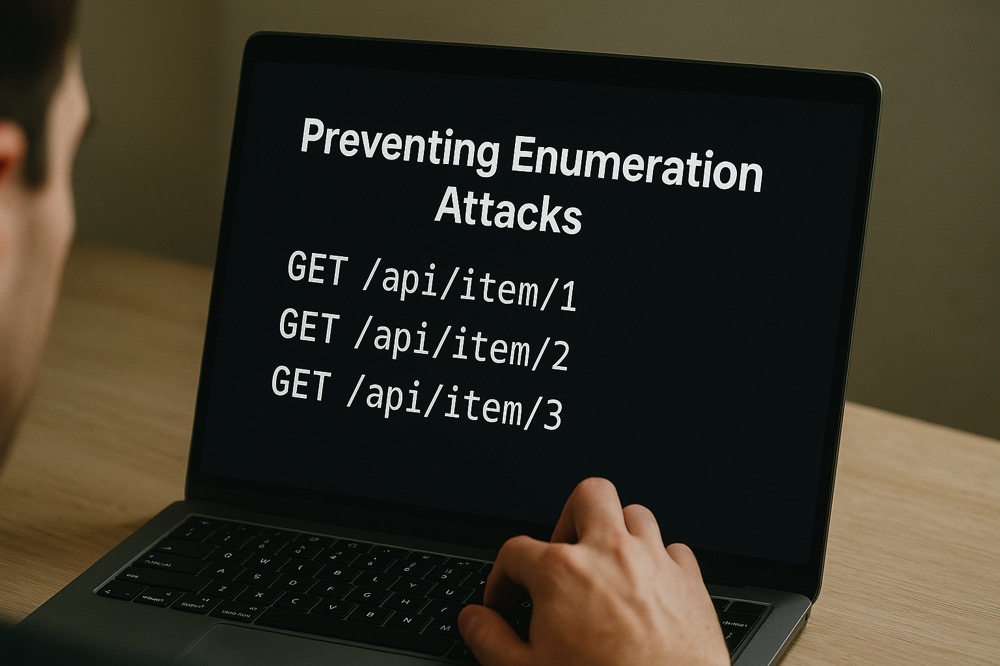
An analysis of how Peakhour's solutions help prevent enumeration attacks, aligning with Visa's Security Roadmap 2025-2028 priorities.
Bot traffic corrupts A/B testing results, leading to flawed marketing decisions. Learn how to protect your tests and ensure accurate data for strategic planning.
Comprehensive analysis of AI-powered cyber threats and how modern application security platforms defend against machine learning-driven attacks. Learn advanced defence strategies for the AI cybersecurity arms race.
An analysis of Peakhour's role in addressing key cloud security categories identified in recent industry analysis, demonstrating its comprehensive approach to modern cloud security challenges.
Popular Australian fashion website TheIconic recently suffered reputational damage from fraudsters placing orders after an account takeover. Learn how this happens and what you can do to stop it.
Comprehensive guide to HTTP security headers for protecting web applications from client-side attacks. Learn essential browser security configurations for modern application security platforms and DevSecOps workflows.
Reviewing the CVSS an EPSS CVE scoring systems in light of the Atlassian Confluence-Aggedon
Apple Private Relay and Chrome IP Protection both reduce IP exposure, but they protect different traffic and should not be treated as residential proxies or automatic fraud signals.
How JA4 constructs a TLS client fingerprint, what JA4+ names, and which details sorting and hashing discard.
Chrome IP Protection masks a user's address for selected third-party requests in Incognito. That is narrower than a VPN and should be treated as privacy infrastructure, not proof of abuse.
ModSecurity's end-of-life marks a pivotal moment in application security evolution. Discover how modern Application Security Platforms are advancing beyond traditional WAF approaches to provide comprehensive protection for web applications and APIs at the edge.
A comprehensive breakdown of the HTTP/2 Rapid Reset flaw and guidance on bolstering defences against potential DDoS attacks.
How OpenBullet packages browser and HTTP automation for credential attacks, and which signals defenders can use without treating any one fingerprint as proof.
Comprehensive analysis of security challenges in headless commerce and Single Page Applications. Learn how to protect modern e-commerce APIs and microservices architectures from scraping, fraud, and automated attacks.
Deep dive into Robust Random Cut Forest (RRCF) implementation for real-time anomaly detection in Application Security Platforms. Learn how advanced machine learning algorithms enhance threat detection and automated response capabilities.
Does TLS extension randomisation assist in hiding Chrome?
What is fingerprinting, and in particular TLS fingerprinting?
Comprehensive guide to IP threat intelligence for modern application security platforms. Learn how managed IP reputation lists and threat intelligence feeds protect applications from known malicious sources and emerging threats.
Peakhour clients are protected against CVF-2022-26134 Atlassian Confluence RCE
© PEAKHOUR.IO PTY LTD 2026 ABN 76 619 930 826 All rights reserved.